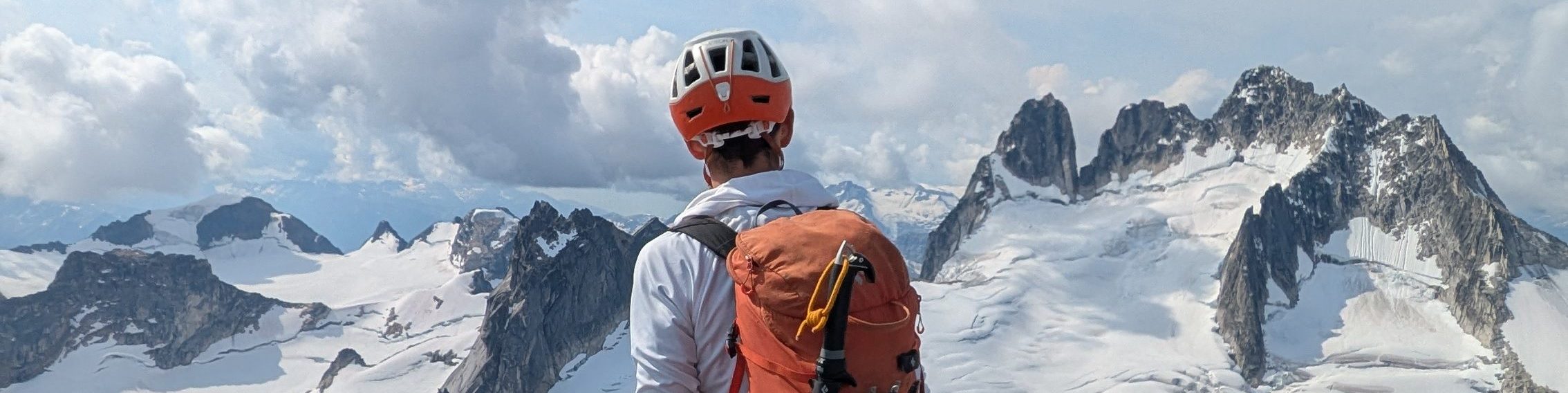
“Just a bit out here aren’t we”
Gary and I woke up around 3am to attempt just about the most complex, difficult and committing alpine climb we had tried to date. And oh boy what a day out it was. Bugaboo Spire had me in(spire)d since visiting three years prior on a trip that yielded three failed objectives, so I was back with a vengeance. Staying at the Kain Hut (+40 mins from Applebee) and anticipating an 12-16 hour day, we left at 4am to give ourselves a decent margin.
DATE: AUG 15, 2026
Time: 12 hours
ELEVATION: 3,176m
GRADE: 5.8+ / D
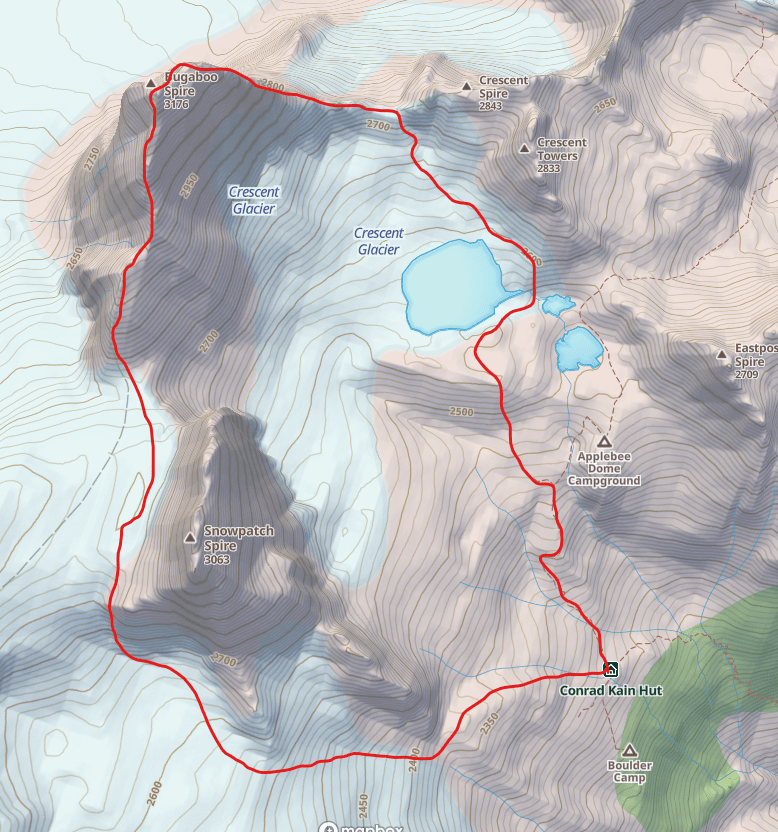
MAP
APPROACH
The first hiccup of the day came only 30 mins into the approach, where, despite having walked this trail numerous times, we were fooled by a faint trail left and ended up way far west of Applebee. We tackled a steep scramble and found our bearings when we encountered the larger of the Crescent Basin tarns. Remembering the approach beta, we knew to head right of this tarn and we were back on route.
Approaching the Bugaboo-Crescent col, we had just enough light to make out the silhouettes of the imposing spires. Given the darkness, we followed faint footsteps in the snow to reach the base of the col and start of the scramble – it’s steep moving, ice axe and crampons recommended! The 4th class scramble up the col was a little spooky in the dark, but guided by rappel anchors we were confident we were on track.
Once the col is gained, the movement is straightforward and the terrace (where the pitched climbing starts) comes into view and is obvious.
BUGABOO SPIRE: NE RIDGE
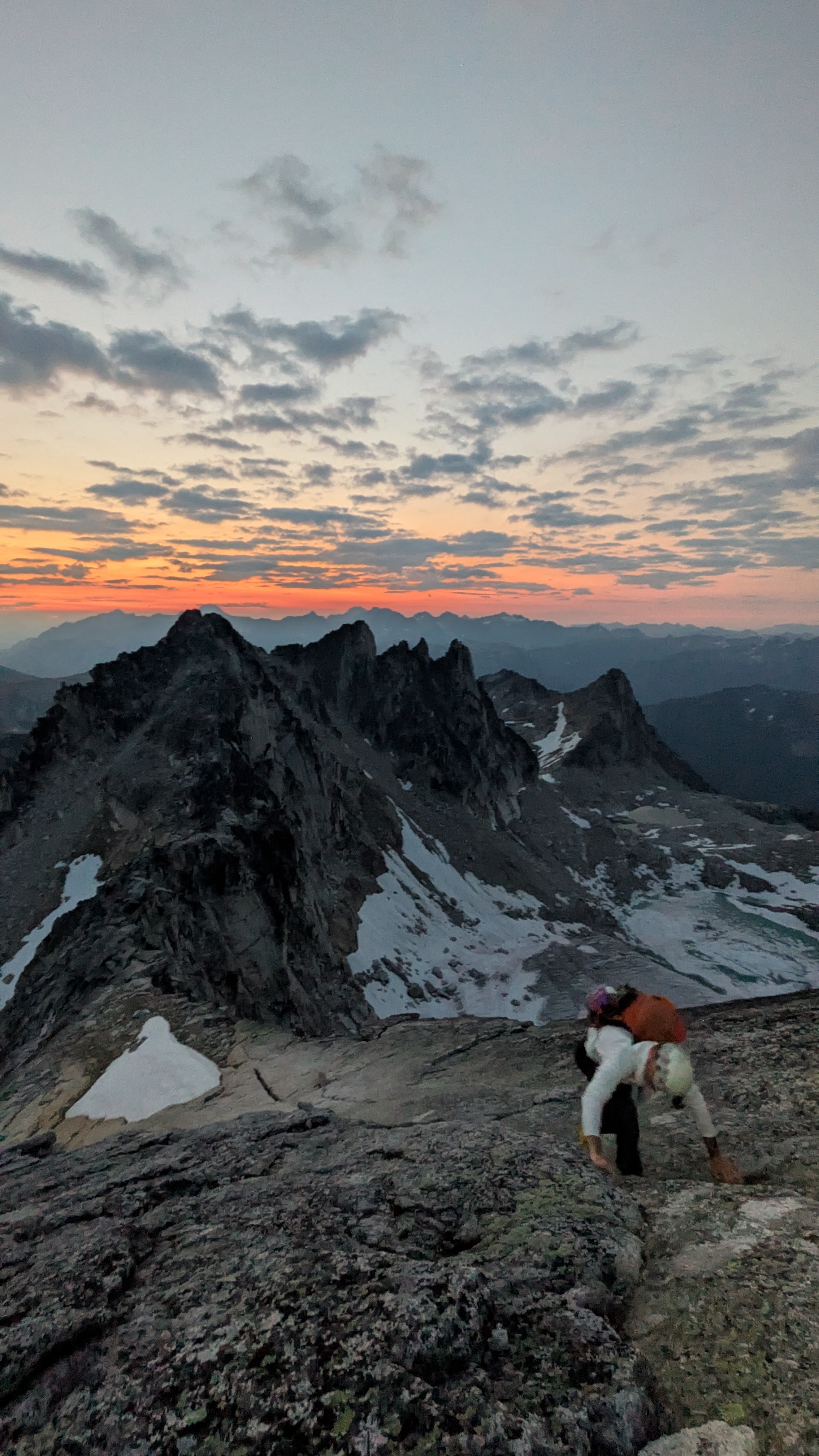
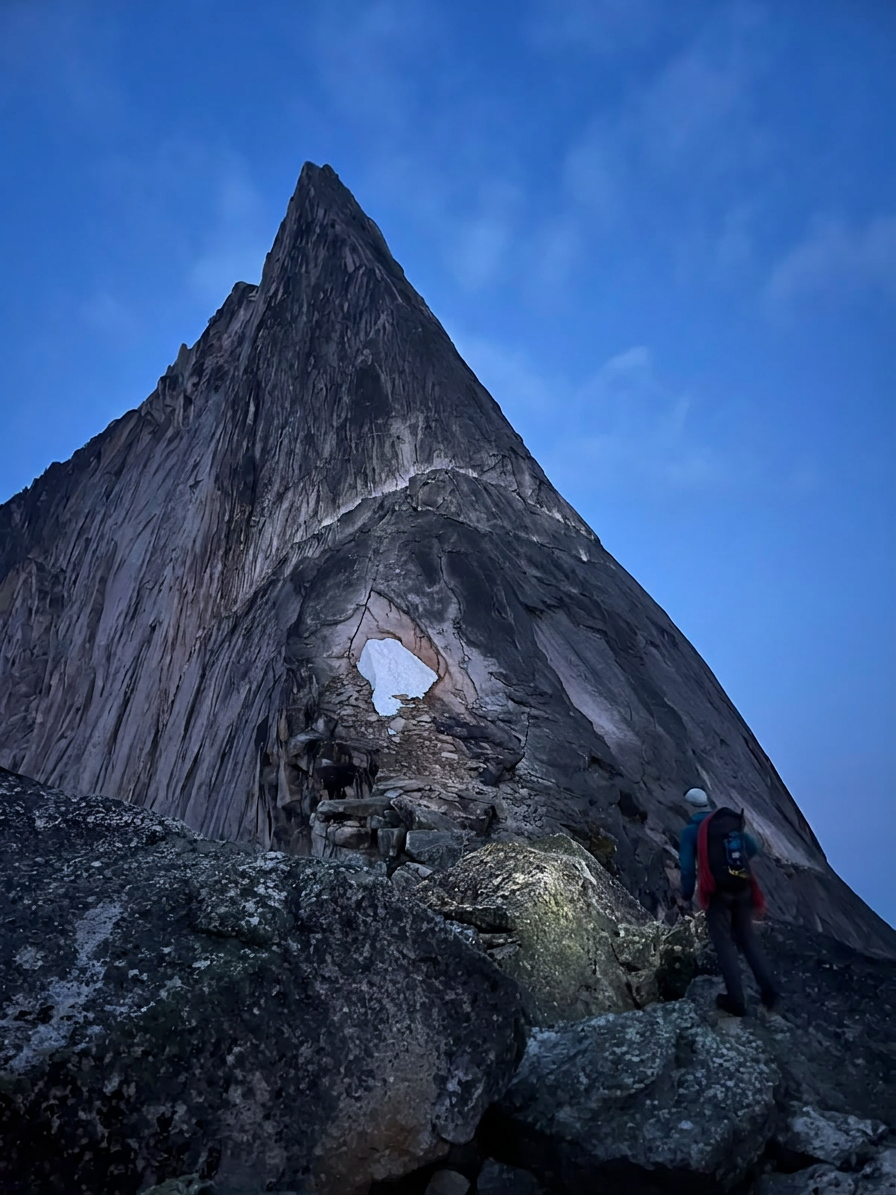
Fortunately, we were the first (and only?) party on the route that day. Gary took the helm for Pitch 1 and we swung leads for the rest of the ascent. There is a ton of beta out there for the climb itself so I will not delve too deeply into this, but there a few points to note.
Led by the Atkinson-Piche guidebook, we found that the pitch lengths described are marginally long. E.g. P1 is described as 50m and we only just about used half of our 70m, P4 is described as 60m and is probably only 40m.
It was an error in my favour, though, as it led me to accidentally climb the 5.9 crack/chimney variation that turned out to be the best pitch of climbing I’ve ever done. It comes highly recommended! Super secure Bugaboo granite with an incredible position, a little sustained but always bomber gear and jams. Pictured below. The variation starts on the left side of a comfortable ledge about 40m into P4. This also avoids the lower section of the ~150m 5.6 chimney section which is the least interesting climbing on the route.
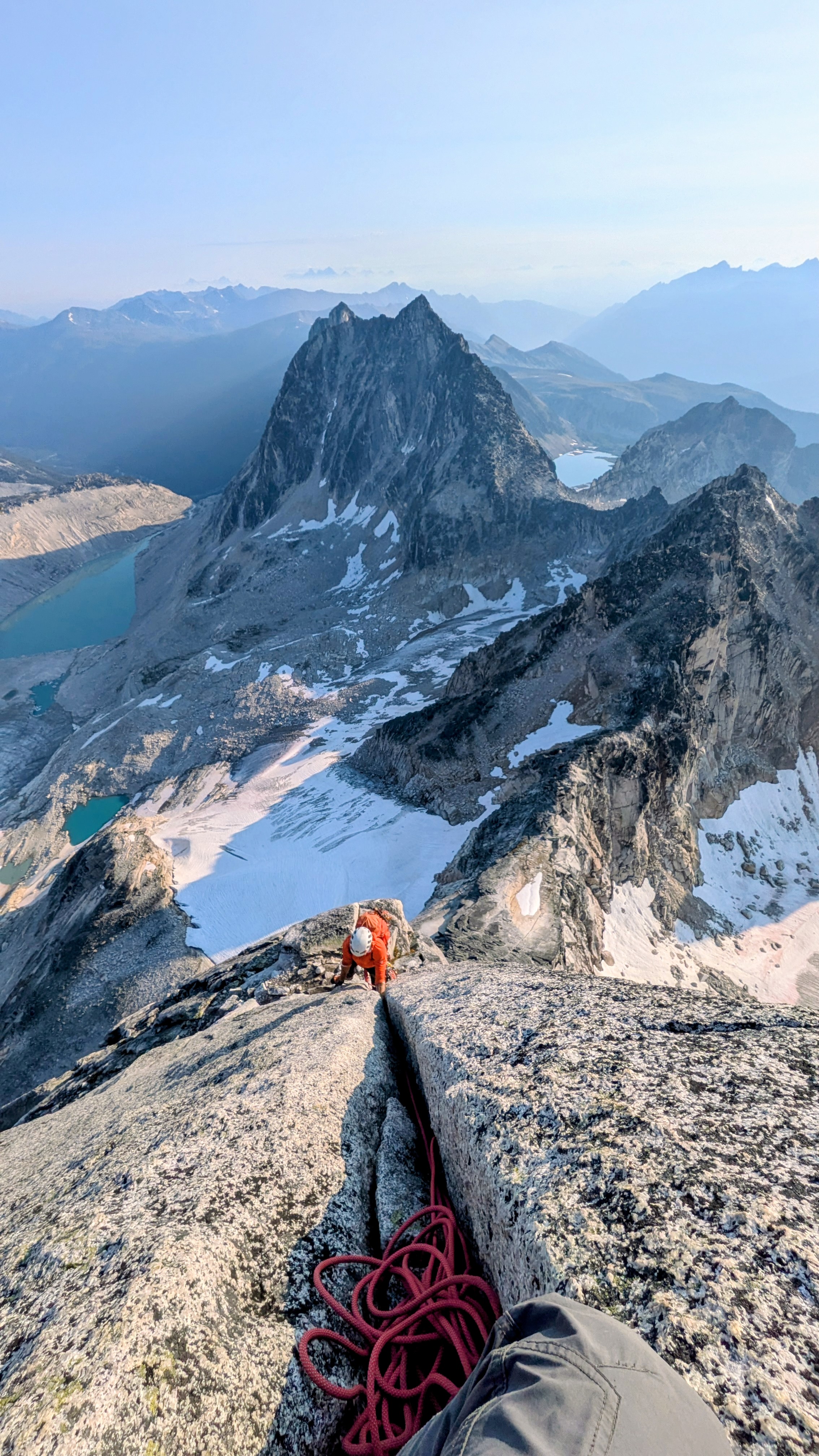
After re-joining and jaunting up the chimney (strong party would be OK to simul), a short and satisfying 5.7 pitch leads to 4th class terrain and eventually the north summit.
SUMMIT TRAVERSE
The traverse starts with a short rappel down east, followed by some seriously exposed 4th class scrambling to the south summit. Gary and I took some coils as way of partial protection, deciding if someone fell that the other would jump the other side of the ridge. Lock in and have fun. Near the south summit, a block is reached at which point there are two obvious options: 1) rappel down east and scramble back up to the south summit, or 2) climb a 5.10 move (aided by standing on your partner’s shoulders or using an in-situ foot sling in the ancohor). We regretfully opted for option 1 as I thought it would be more straightforward – wrong! The scramble back up a blocky gulley to the summit ended up being more difficult than we thought (5.6?), so we ended up simuling with a few pieces. The direct 5.10 move would absolutely save time for a confident party.
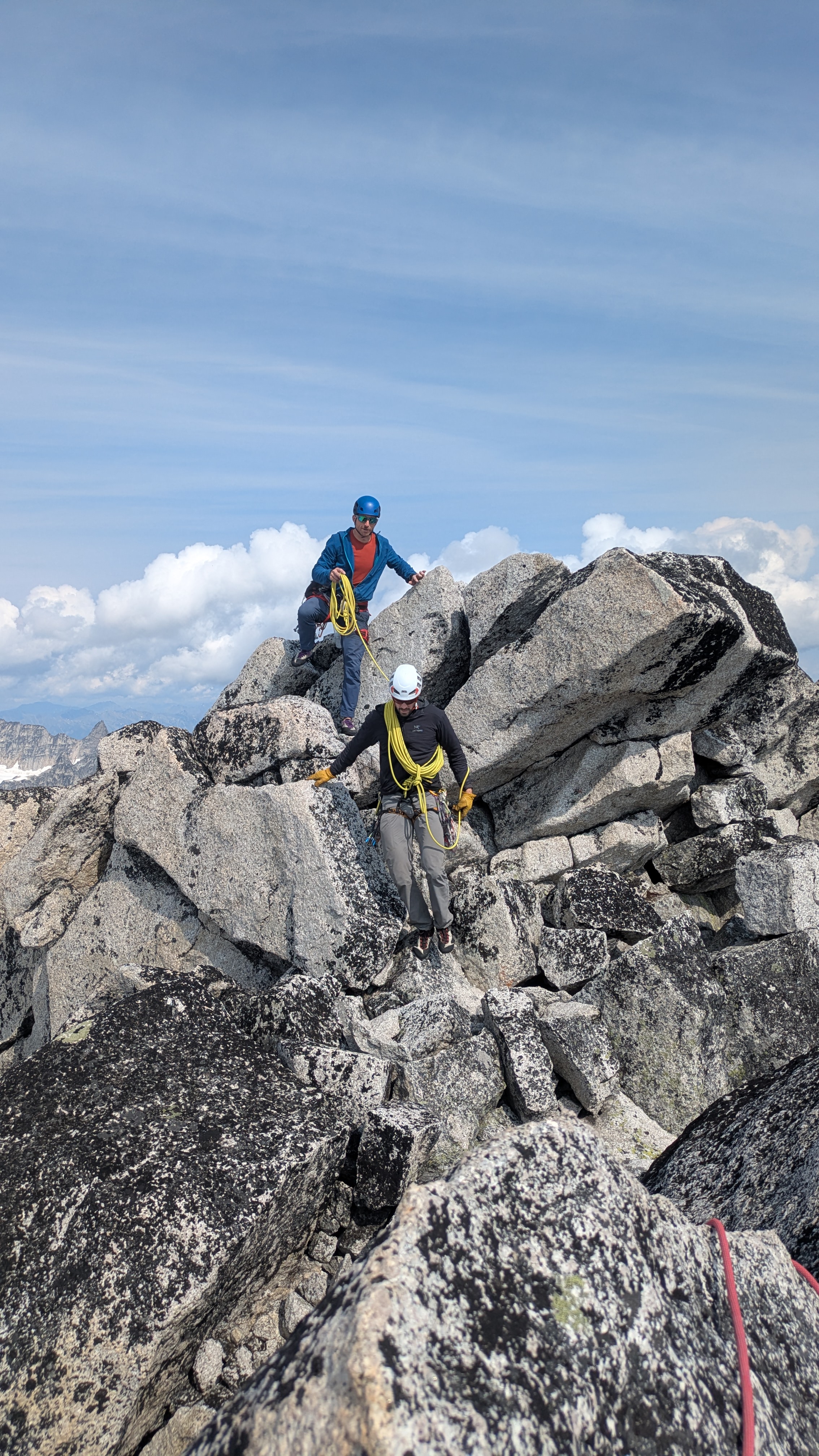
We bumped into another party on the south summit, which ended up being the only other humans we saw all day. They had climbed the Becky-Choinnard a couple of days prior and had cut their rope in the process, so we shared our rope for the first four rappels.
KAIN ROUTE RAPPELS / DESCENT
The rappels down the Kain Route are relatively straightforward (see StephAbegg.com July 2016 topo for a useful overlay). Rap 4 was a little heady and exposed – it’s short and diagonal to a ledge but is tempting to try and traverse further out to reach more secure ground. Don’t be tempted, trend down and climb back up.
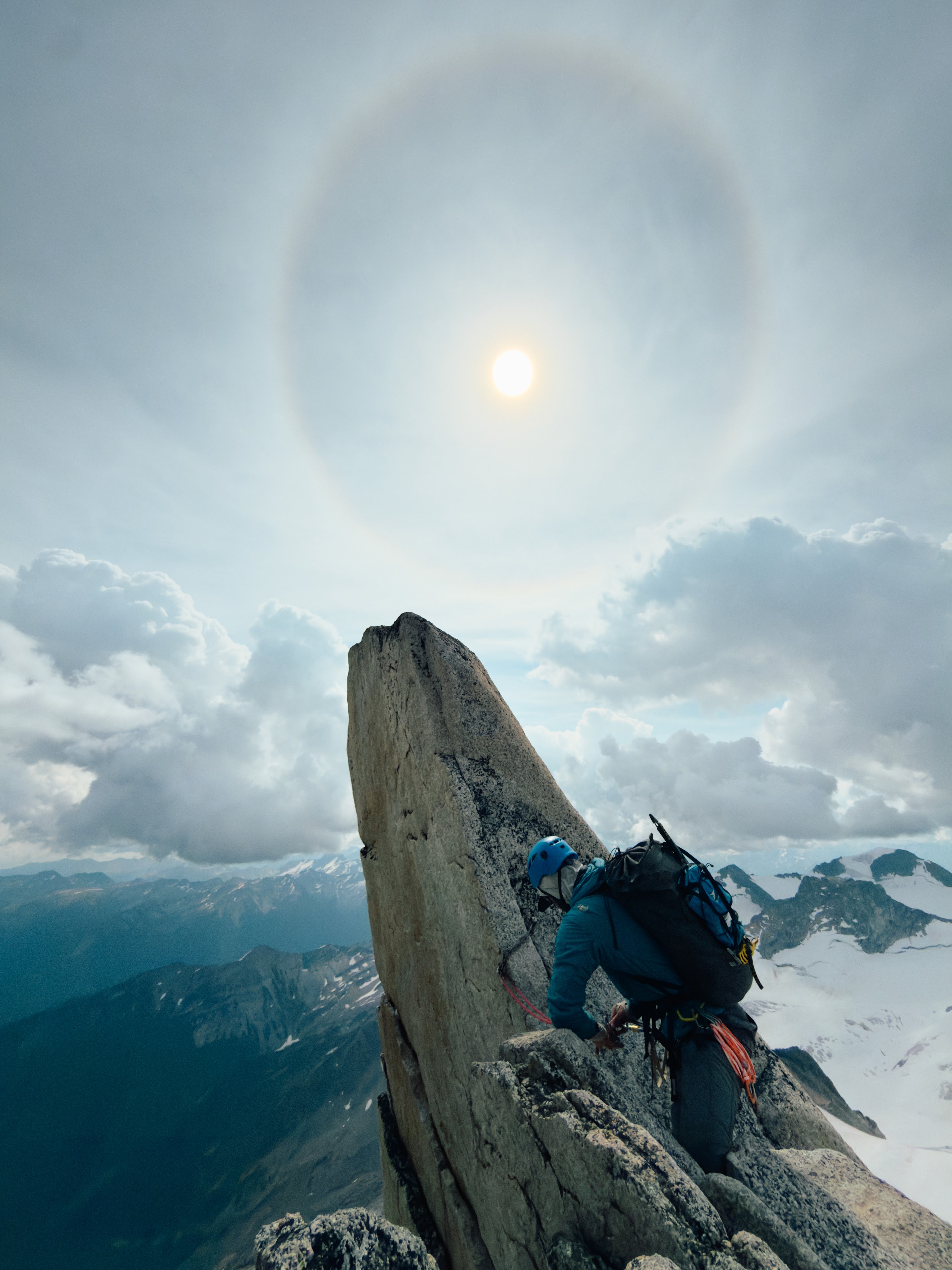
After Rap 6, it’s downclimbing all the way to the B-S col, which should be obvious on a clear day. Useful cairns will ease routefinding in the trickier sections on a poor visibility day.
RETURN TO KAIN HUT
We had heard from numerous parties and guides that the B-S col was out, and had been for a while. Out of curiosity we took a look down the col and she was looking dry, loose, and super sketchy. We opted to travel no more than 2 hours extra to save some seriously moist underwear – traversing west of Snowpatch down to the Snowpatch icefall rappels (6x30m or 3x60m). There is an additional anchor conveniently placed 5-10m from the base of the bergschrund. Fortunately we could step right onto the glacier from the base of the 6th rappel, but can see on a particularly warm, dry year that the last anchor could be useful for rescuing people or gear.
Without exaggeration I can say this is the best day of climbing I have ever done – I would recommend it to anyone with a decent amount of alpine climbing experience and a good head for exposure. What I loved is that the actual pitched climbing was only a quarter of our day (3/12 hours), the rest was fast, efficient travel in an incredible postion and setting with weather I can only describe as perfect. In fact, it is what inspired me to start this website and start writing/reporting on trips. I need a way to immortalize days like this! I will continue to write these reports with hopefully more and improved helpful content, photos, maps, and topos. Watch this space.

